▶The Rise of the Balcony Solar Market
Solar panels installed on balcony railings are quietly transforming how energy is used and fostering new market opportunities. German residents recently discovered a new product category at
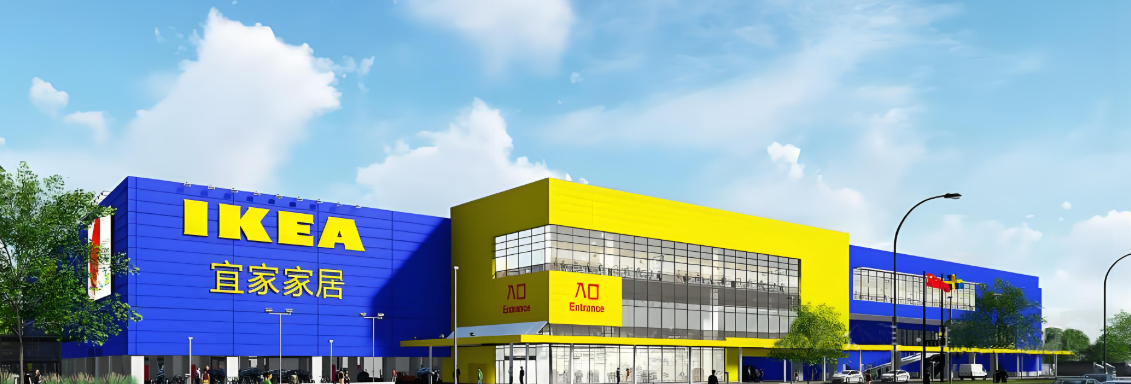
CNCOB – balcony solar packages. The basic version starts at 449 Euros, including two 450W solar modules, a
microinverter, and an installation kit. CNCOB Family cardholders also get a 15% discount. This move by the home furnishing giant is not an isolated case. In Germany, registrations for balcony solar systems are projected to exceed 1 million by the end of June 2025, a huge jump from 275,000 units in 2023.
▶Reasons for the European Market Boom
The European balcony solar market is heating up fast, mainly due to three factors: soaring energy prices, relaxed approval policies, and government subsidies. Since the 2022 European energy crisis, residential electricity prices in Europe have generally risen by 50% to 150%. Residential electricity prices in countries like Germany, Austria, and Italy have even reached 0.3-0.5 Euros/kWh. On the policy front, Germany allows systems under 800W to be installed without approval, while Austria and the Netherlands support plug-and-play grid connection and provide government subsidies ranging from 100 to 500 Euros.
▶Opportunities in the Chinese Market
Unlike the Chinese market environment, the boom in the European market has its unique characteristics. Experts point out that domestic residential electricity prices are approximately one-fourth to one-fifth of those in Europe, so there's less demand for saving on electricity bills.
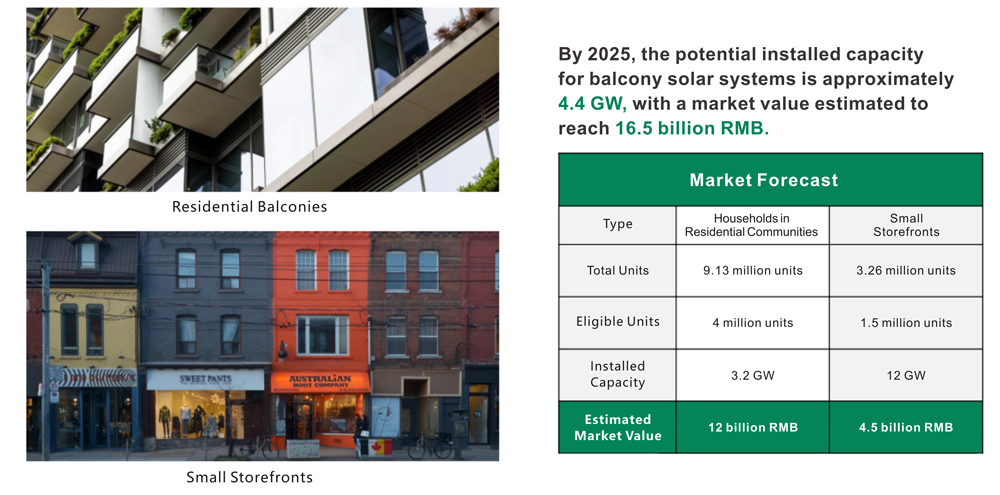
However, this does not mean there are no opportunities in the Chinese market. Some institutions predict that domestic balcony solar installations will be around 1,000 units in 2024, rising to 10,000 units in 2025, and 100,000 units in 2026, shifting from a niche product to a mass-market one. 2025 has become the inaugural year for China's balcony solar market.
▶Impact of Policy Shift
The arrival of China's inaugural year for balcony solar is driven by significant policy changes. Document No. 136, issued by the National Development and Reform Commission and the National Energy Administration in early 2025, requires that, in principle, all electricity generated by new energy projects completed after May 31st must be sold on the market, with prices determined by market forces. This policy has disrupted traditional solar power generation models. In the bidding results for the new energy electricity price mechanism in Gansu Province, both wind and solar projects cleared at the minimum bid price of 0.1954 yuan/kWh. The old model of generating solar power and selling excess electricity back to the grid for profit is no longer sustainable under the new policy, prompting residential solar developers to increasingly pivot to balcony solar.
▶Mature Electricity Price Conditions
At the same time, the growth in domestic residential electricity consumption and the surging peak-hour electricity prices under time-of-use tariffs have also created ideal conditions for balcony solar. Zhejiang Province's recently announced time-of-use electricity pricing policy stipulates that electricity prices during super-peak periods are more than 105% higher than off-peak rates, while commercial users face an 85% increase during peak hours. For businesses that use a lot of electricity and pay high rates, the "self-generation, self-consumption" model of balcony solar is becoming increasingly cost-effective.
▶Target Customer Group Positioning
Unlike the European market, which primarily targets residential users, China's balcony solar products primarily target small and medium-sized industrial and commercial users. With the growth in domestic residential electricity consumption and the surging electricity prices during peak hours of time-of-use tariffs, the market for balcony solar is expanding. Currently, domestic balcony solar end-users are primarily businesses with high electricity consumption and high electricity prices, small processing workshops, homes that use so much electricity they're subject to higher-tier progressive tariffs, and some temporary sites without grid access. Just considering street-level shops, there are approximately 1.1 million street-level shops in China suitable for solar installation. A sales professional explained that assuming a balcony solar system produces 3 kWh of electricity per day, with electricity costing 1 yuan/kWh and the system costing 3,500-4,000 yuan, it's estimated to pay for itself within three years.
▶Product Innovation and Adaptability
Manufacturers are also innovating products to suit the Chinese market's unique characteristics. One company, for example, designed its 250-watt compact panels for the typically shorter balconies (2 to 3.5 meters) found in high-rise residential buildings, making them adaptable even to 2.5-meter balconies with corners. To reduce installation difficulty, some companies have specifically designed their energy storage batteries to be fixed with adhesive technology, doing away with the need for storage brackets. Other companies have launched balcony solar products that hang on railings with hooks, or adhere directly to walls, allowing them to be installed even without a traditional balcony. These product innovations aim to address the challenges of enclosed balcony structures and limited installation space common in high-rise residential buildings in China.
▶Channel Innovation and Layout
As for sales channels, balcony solar companies are increasingly targeting traditional home appliance distribution networks. In some dealer recruitment events, organizers made it clear they prefer home appliance dealers. They believe that home appliance dealers have long been deeply embedded in local markets, with extensive local customer bases. Currently, the home appliance market suffers from severe homogenization, with most businesses facing sales difficulties and low profits, urgently needing new, differentiated products like balcony solar. Some companies have already established 100 flagship stores, 2,800 experience centers, and 35,000 dedicated counters nationwide, and have also opened official flagship stores on JD.com/Tmall.
▶Dealer Advantages
Home appliance dealers are familiar with home wiring, equipment installation, and power load distribution, and have a large customer base of high-net-worth households and those who have recently renovated their homes. They can also leverage their existing standardized installation teams and service systems for after-sales support.
▶Business Model Innovation
In terms of business models, domestic companies have also rolled out innovative approaches. Installment payments have become an important means of promoting balcony solar. One company is currently collaborating with Alipay to offer balcony solar leasing and installment services, allowing customers to pay in 12 monthly installments over a year. Installment plans are also standard in the European market, with some companies already partnering with multiple online platforms and financial service institutions to provide installment payments and green consumer credit.
▶Simplified Installation
Ease of installation is also a key consideration in product design. CNCOB's products in Germany, through standardized design, reduce installation time to under 1 hour and cut costs by 60%.
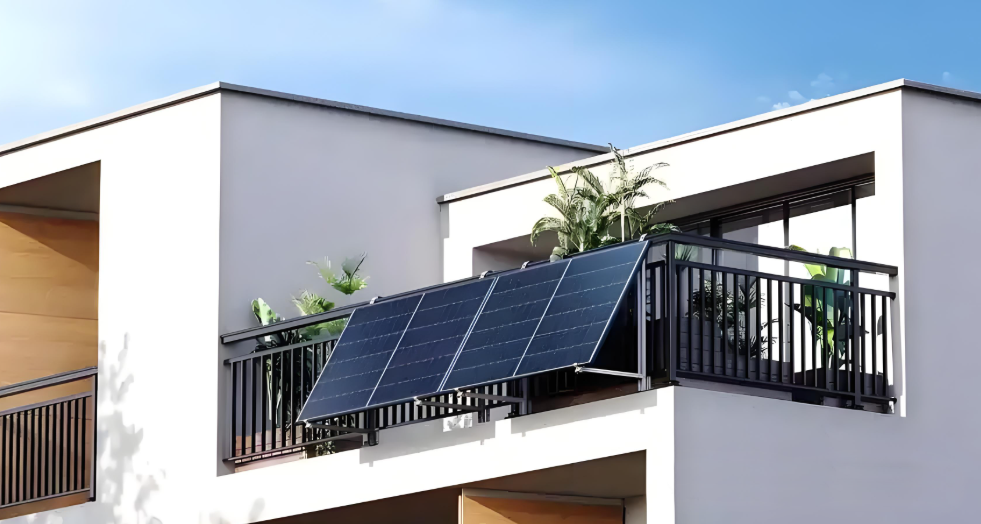
Traditional solar systems require a professional team, taking 1-2 days to install and costing over 5,000 Euros. CNCOB's standardized design, however, significantly lowers the installation barrier. "We're turning solar systems into consumer goods, just like furniture," said CNCOB Germany's Head of Sustainable Business.
▶Market Outlook
Forecasts suggest that China's balcony solar installations will hit 100,000 units by 2026, moving from a niche market to a mass-market product. Companies that proactively develop distribution channels, optimize installation designs, and innovate business models are expected to get a head start in this blue ocean market. Balcony solar isn't just a product; it's a new way of thinking about energy consumption – it empowers every household to become both a producer and consumer of electricity, bringing green energy from factories to neighborhoods, and shifting from centralized to distributed.


