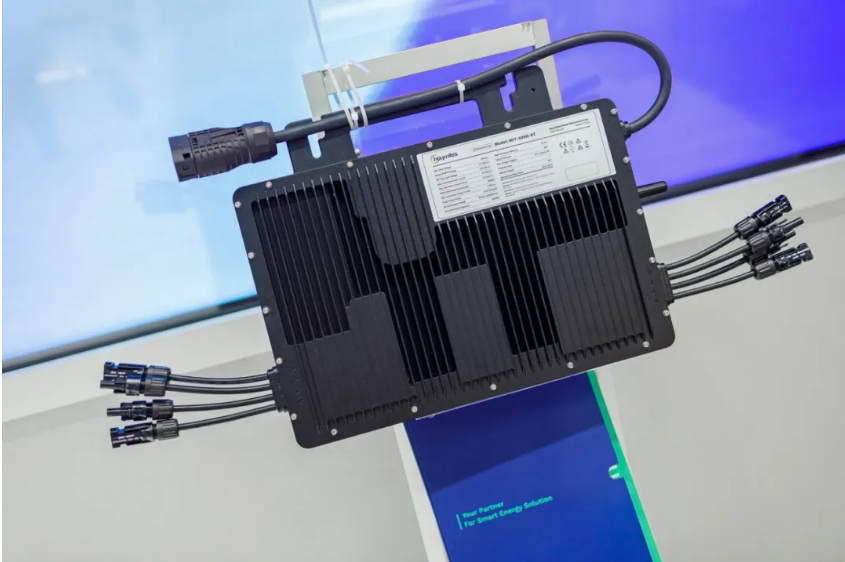
A micro inverter typically refers to inverters used in solar power systems with a power rating of 2000 watts or less and with module-level MPPT capability, officially called a micro grid-tied solar inverter. The term "micro" distinguishes it from traditional centralized inverters. Traditional solar power systems work by wiring all solar panels together in series or parallel to combine the direct current (DC) generated under sunlight, then using one central inverter to convert this DC power to AC for the grid. In contrast, a microinverter converts power for each panel separately. The main benefits are having separate MPPT control for each panel, which boosts the system's overall efficiency, plus it avoids common problems with central inverters like high DC voltage, poor low-light performance, and the so-called "bucket effect" (where system performance is limited by the weakest panel).
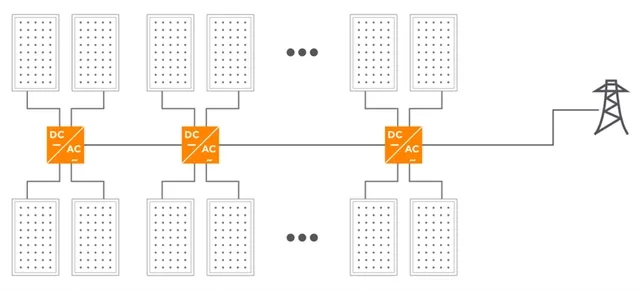
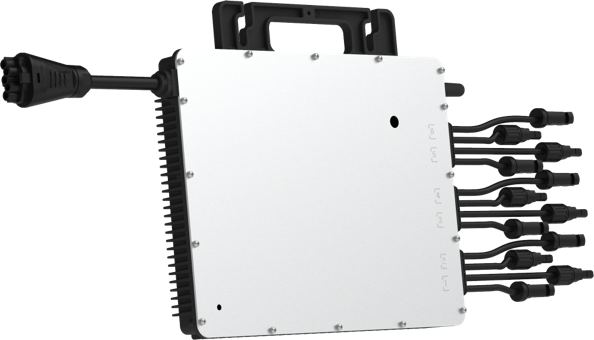
DC Input: The direct current (DC) generated by PV panels is transmitted via cables to the microinverter.
Maximum Power Point Tracking (MPPT): A microinverter contains an MPPT mechanism that monitors the output voltage and current of the PV panel to ensure maximum power extraction.
Inversion: The microinverter dynamically adjusts output voltage and frequency while converting DC power into AC to match the standard grid requirements (e.g., 230V/50Hz in Europe, 120V/60Hz in the US).
Synchronization and Grid Connection: The microinverter ensures that the generated AC power is synchronized with the grid and automatically shuts down during grid instability or outages for safety purposes.
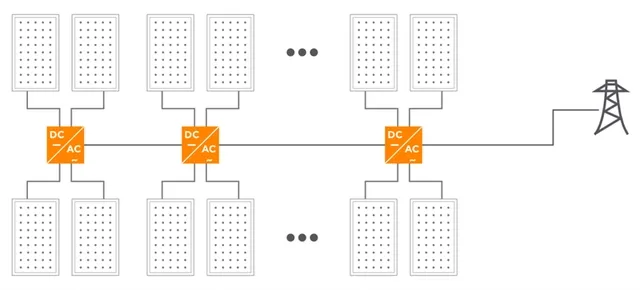
The categories, definitions and descriptions, use cases, advantages, and disadvantages of central inverters, string inverters, hybrid inverters, and micro-inverter systems.
| Classification | Definition | Application Scenarios | Advantages | Disadvantages |
|---|---|---|---|---|
| Centralized PV Inverter | Centralized technology connects multiple photovoltaic arrays to a DC bus, which is fed into a single large inverter. Mainly suitable for situations like utility-scale solar farms, with unit capacities typically above 10kW. | Applicable for large-scale photovoltaic (PV) systems, such as utility-scale solar farms and building rooftops with ample space. | 1. Few inverters required – simpler design, lower cost. 2. High conversion efficiency due to large-scale MPPT. 3. High system reliability and low operational costs. |
1. Higher DC-side voltage, strict requirements for matching PV strings. 2. Ineffectiveness in partial shading due to limited string-specific capability. 3. Maintenance costs increase if the inverter fails since the entire system may halt temporarily. |
| String PV Inverter | String inverters attach independently to one PV string. Each string has its MPPT (Maximum Power Point Tracking) unit, which improves system reliability and energy production at the string level. | Suitable for distributed PV systems, including residential and small commercial rooftop systems. | 1. Effective against partial shading effects and improves energy efficiency. 2. Higher flexibility in system expansion and adaptability to various installations. |
1. Higher initial investment compared to larger centralized inverters. 2. More components increase maintenance complexity. 3. EMI (Electromagnetic Interference) from neighboring devices may impact its operation. |
| Distributed PV Inverter | Combines centralized and string inverter advantages. Multiple units operate independently but coordinate among systems, ideal for hybrid installations or medium-scale projects. | Can be used for combination projects where decentralized systems are beneficial but central management still adds benefits. | 1. Maintains a balance between centralized adaptability and decentralized efficiency. 2. Simple wire configuration and system scalability. 3. Easy fault isolation and load sharing at output. |
1. Managing coordinated communication across units is complicated and technology-intensive. 2. Fault tolerance thresholds depend on efficient monitoring systems. 3. Installation involves higher capital/project costs upfront before return on investment. |
| Micro Inverter | Each PV module is connected to its small inverter, performing energy optimization directly at the module level, ensuring maximum output under varied environmental conditions. | General applications include smaller rooftops or locations with more complex shading patterns, mismatched module orientations, or modular installation needs. | 1. Modular installation provides maximum energy output per module. 2. Eliminates shading mismatch effects, suitable for small-scale, complex installations. 3. Simplifies monitoring and fault diagnosis. |
1. High cost per watt compared to other inverter types. 2. Difficulty in centralized performance monitoring for broader systems. 3. May not be cost-efficient for large installations where centralized systems provide economies of scale. |
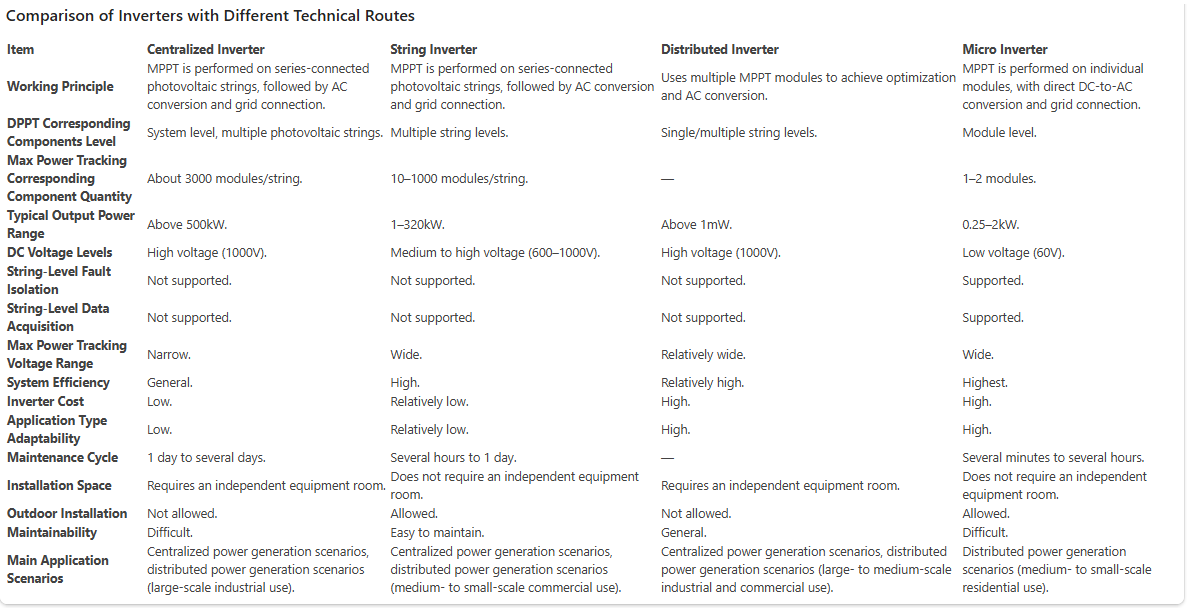
A Comparison of Different Technological Approaches of Inverters
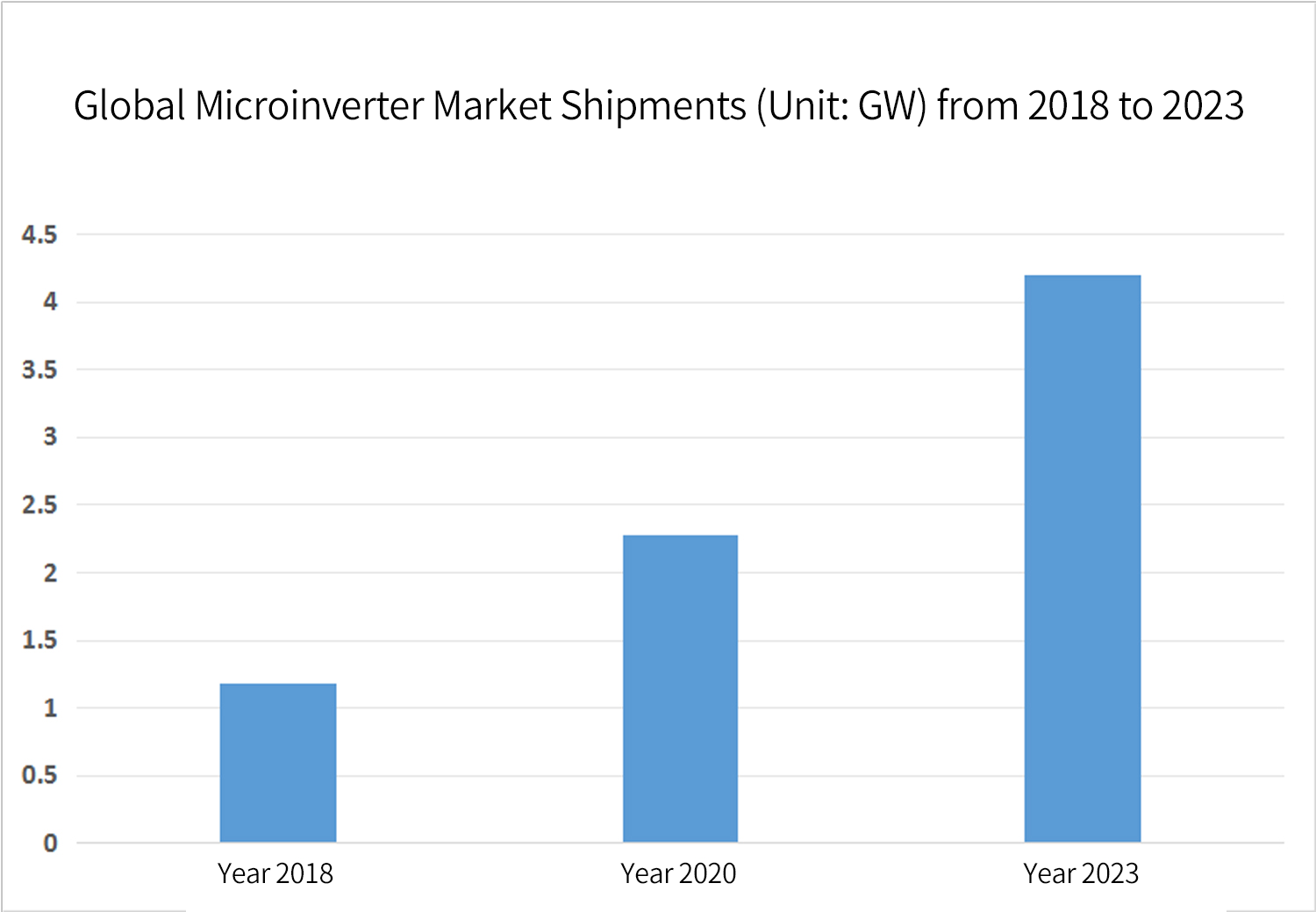
In recent years, with the expansion of distributed PV systems, global shipments of microinverters have grown substantially—from 1.18 GW in 2018 to 2.28 GW in 2020—achieving an annual compound growth rate (CAGR) of 39.12%. Preliminary estimates indicate shipments surpassed 4 GW by 2023.
Hoymiles Technology Co., Ltd.: Established in Hangzhou in 2012, Hoymiles specializes in developing, manufacturing, and selling photovoltaic inverters along with other electrical conversion equipment widely used in distributed PV systems globally.
According to data from S&P Global Commodity Insights, Hoymiles ranked second globally in annual shipments of microinverters from 2021 through 2023.
Between 2019 and late 2023 alone, Hoymiles shipped over 3.12 million units across more than 180 countries/regions—a testament to its product quality recognized internationally.
CNCOB: established in 2011, is a renewable energy company focused on researching, developing, and manufacturing solar grid-tied, off-grid, and energy storage inverters, as well as smart energy management solutions for consumers. Growatt's solar grid-tied inverters offer power capacities ranging from 400W to 10kW, while its off-grid and energy storage inverters provide power capacities ranging from 0.4kW to 30kW. These products are designed for residential and commercial use, solar-powered poverty alleviation initiatives, large-scale ground-mounted solar farms, and a variety of energy storage system applications.
APsystems Inc.: Founded in 2010 with a focus on MLPE (Module-Level Power Electronics), APsystems has developed competitive MLPE products including microinverters alongside rapid shutdown devices aimed at enabling comprehensive "PV + storage" solutions worldwide.
The company operates subsidiaries internationally within major markets like Australia and France; as of now, it has installed over 380,000 operational systems across more than 130 countries globally.
DEYE Technology: Based near Ningbo city, DEYE integrates research & development with design, production, sales, and service to deliver renewable energy solutions across four primary business pillars including hybrid storage-centric solar offerings. Since its public listing on Shanghai Stock Exchange in April 2021, DEYE has established itself as a leading player within the solar inverter industry.
TSUN Energy: Rooted in German engineering principles emphasizing superior reliability standards, TSUN Energy focuses on producing high-quality microinverters known for their durability and customer satisfaction. The company continues to push industry boundaries as a Tier One brand through innovations targeting safe and scalable consumer-oriented applications.
Recent Developments Driving Growth Across Green Energy Contexts:
In response to global carbon neutrality imperatives driving renewable energy adoption at unprecedented rates:
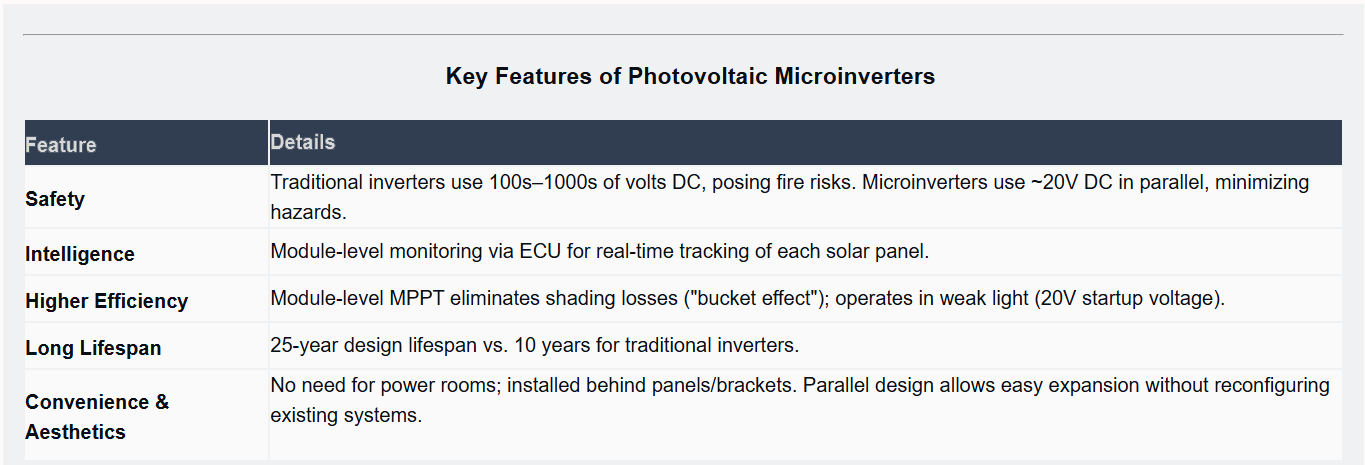
Enhancing Safety Features
Microinverters have become indispensable safety solutions within residential PV systems by elevating safety standards through innovative design approaches.
Expanding Application Scenarios
Microinverters' flexibility allows them to adapt across diverse scenarios—from traditional rooftop installations to balconies, irregularly shaped roofs, bus stops, airports, corridors, gas stations—and beyond.
Simplified Installation & Cost-Efficient Maintenance
With plug-and-play installation methods reducing labor costs/time investment alongside durable designs extending lifespans up to 25 years while minimizing maintenance needs over time—microinverters offer unparalleled convenience for installers.
Household Adoption Trends
The growing trend toward household adoption makes microinverters increasingly accessible as they bring green energy into homes through user-friendly plug-and-play configurations at affordable costs readily available both online/offline retail platforms globally embraced democratizing eco-conscious choices!


